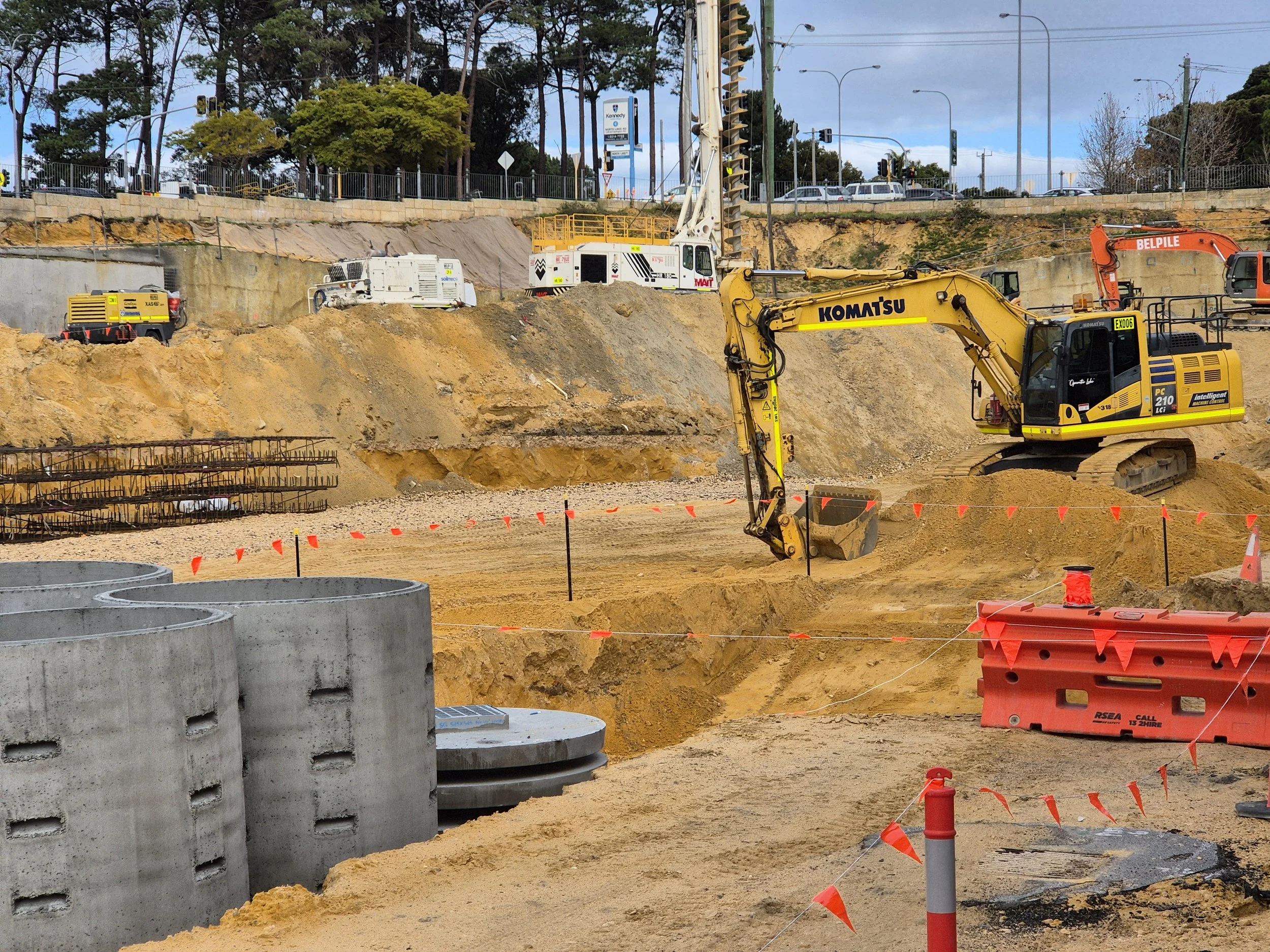
Safe, reliable access is essential on any construction site. Workers and visitors need clearly defined pedestrian routes, while trucks, concrete pumps, cranes and other vehicles may require temporary access across soft or sensitive ground.
Pedestrian walkway matting and heavy-duty bog mats can both help, but they serve different purposes. Walkway matting is used to define pedestrian routes, while vehicle-rated bog mats create temporary tracks and help protect the ground beneath vehicles and machinery.
Every site is different. Access planning should form part of the site-specific risk assessment and traffic-management plan.
1. Assess the Site and Access Requirements
Begin by identifying who and what will use each access route.
Consider:
Pedestrians, contractors and visitors
Wheelbarrows and material trolleys
Utes and delivery vehicles
Concrete trucks and concrete pumps
Cranes, forklifts and other mobile plant
Emergency and service vehicles
Inspect the proposed routes for soft ground, mud, sand, standing water, uneven surfaces, excavations, blind corners and interaction between pedestrians and vehicles.
Where possible, plan separate pedestrian and vehicle routes rather than expecting both to use the same access surface.
2. Separate Pedestrians from Vehicles
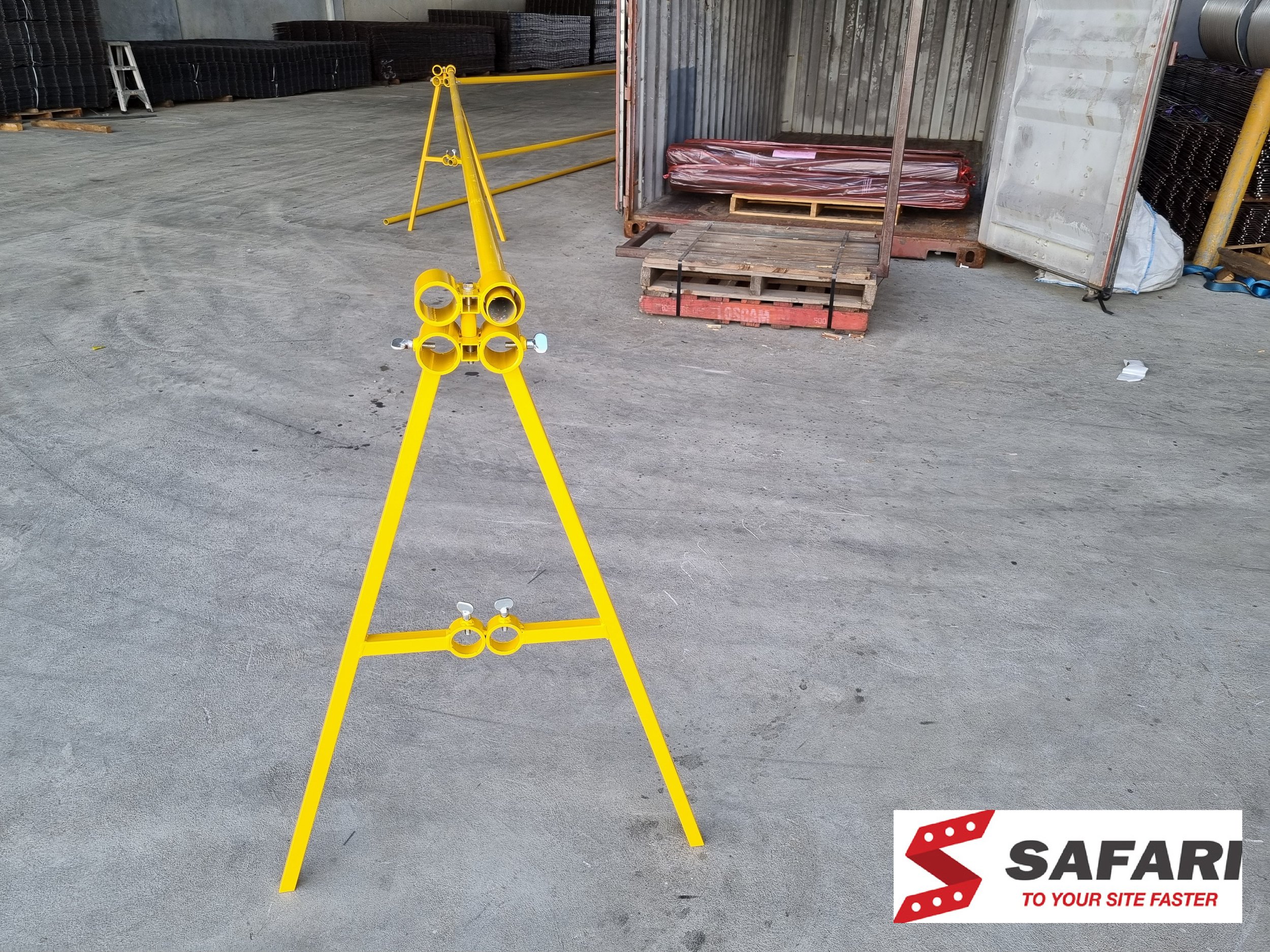
Safari Group’s Yellow A Frame fencing is ideal for use as a highly visible physical separation barrier between vehicles and workers
Physical separation is generally more effective than relying only on signs or painted lines.
Depending on the site, pedestrian routes may require temporary fencing, barriers, bollards or another suitable separation system. Any location where pedestrians must cross a vehicle route should be clearly identified and provide adequate visibility for pedestrians and operators.
Avoid directing pedestrians through loading zones, reversing areas or places where materials are regularly moved.
3. Prepare the Underlying Surface
Temporary matting should be installed over a stable, prepared surface suitable for the intended traffic.
Before installation:
Remove waste, sharp objects and loose materials
Address significant holes, ruts and sudden changes in level
Manage standing water and drainage where practical
Identify unsupported edges and other trip hazards
Confirm that the ground can support the intended use
Check how conditions may change following rain or vehicle activity
Matting should not be used to conceal an unsuitable or unsupported surface.
4. Choose the Correct Mat for the Traffic
Pedestrian walkway matting and vehicle bog mats are not interchangeable.
Construction Site Walkway Matting
Walkway matting is intended to create a visible, clearly defined route for pedestrians on suitable construction, civil, mining and industrial sites.
When selecting pedestrian matting, consider:
Width, length and thickness
Visibility and colour
Surface texture and drainage
Slip-testing information
Suitable underlying surfaces
Indoor and outdoor suitability
Securing requirements
Cleaning and storage instructions
Suitability for wheelbarrows or trolleys
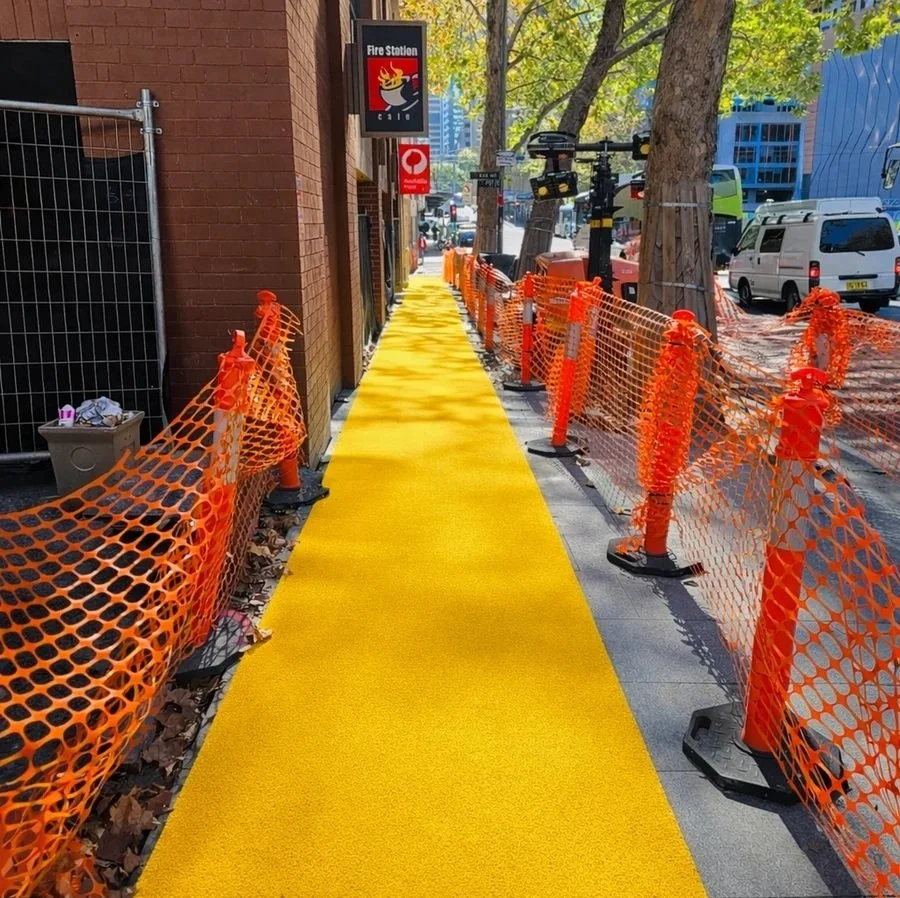
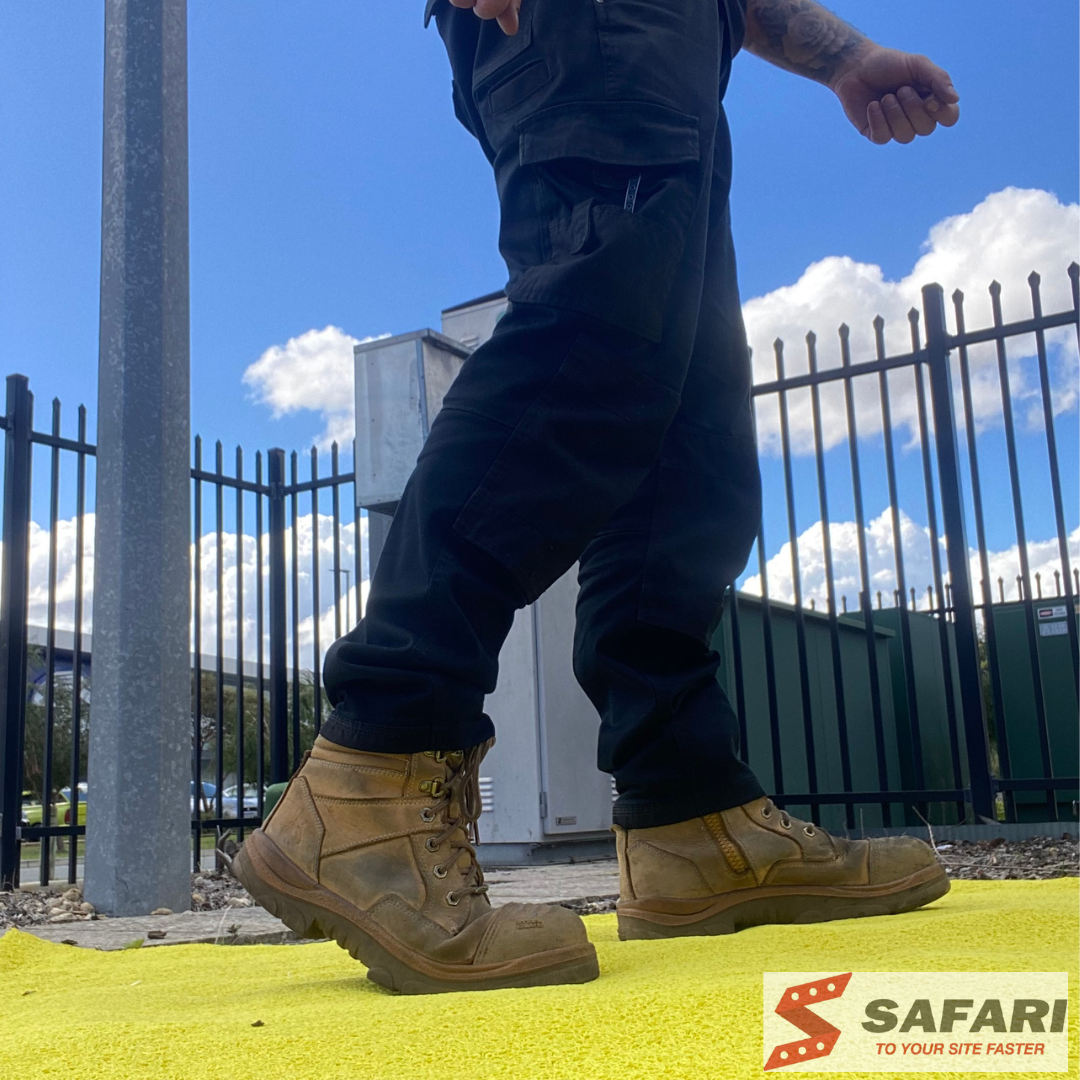
Yellow Site matting displayed in use as a pedestrian walkway
Safari’s yellow heavy-duty construction site walkway mat measures 10m × 1.2m × 13mm and is designed for creating a clearly defined pedestrian access route.
Do not assume pedestrian walkway matting is suitable for vehicles or machinery.
ArmourSafe Bog Mats for Vehicle Access
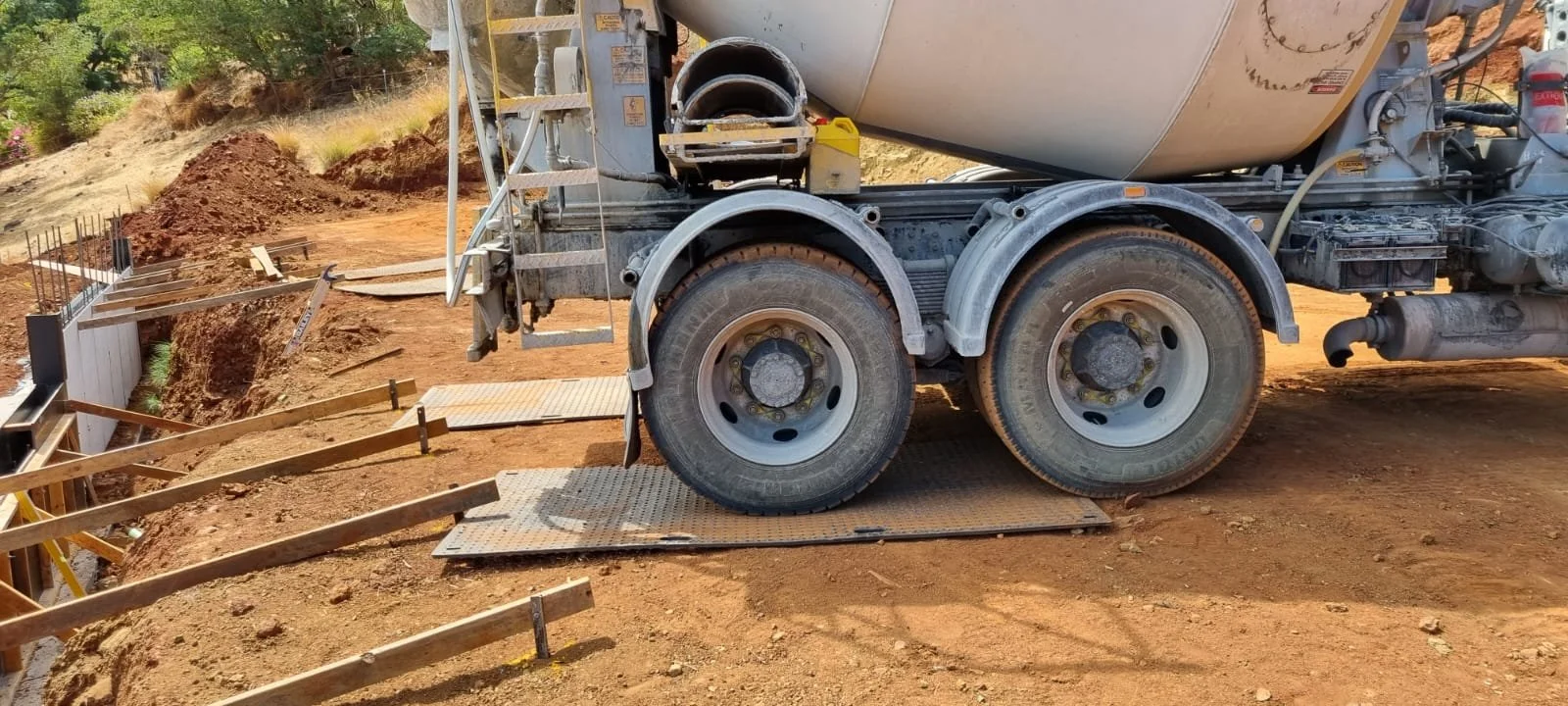
Armoursafe bog mats shown in use for concrete truck access on site
Soft, sandy or boggy ground can make it difficult for construction vehicles and machinery to enter or move around a site. Vehicle-rated bog mats can be used to form temporary wheel tracks or access routes while helping protect the ground underneath.
Safari’s ArmourSafe bog mats and ground protection mats are available in plastic and steel options for vehicle-access and ground-protection applications.
When selecting bog mats, consider:
Vehicle or machinery type
Gross load and wheel loads
Ground conditions and bearing capacity
Mat material, size and thickness
Required route width and length
Connection and securing method
Installation and retrieval equipment
Surface grip
Turning, braking and outrigger forces
Manufacturer load limitations
The appropriate mat should be selected for the specific vehicle, load, ground conditions and application. A site engineer or other competent person may need to assess higher-risk installations.
Bog mats used as a vehicle route should not automatically be treated as a pedestrian walkway. Separate pedestrian access should still be provided where required.
5. Install and Secure the Access Route
Follow the manufacturer’s instructions and the requirements identified in the site risk assessment.
For pedestrian walkway matting:
Unroll the mat over the prepared surface
Ensure it lies evenly
Secure it using a method suitable for the surface
Check edges and joins for potential trip hazards
Keep the route clear of tools, materials, leads and hoses
For vehicle bog mats:
Confirm the planned layout before installation
Position mats to support the expected wheel path
Connect or secure them using the recommended system
Avoid unsupported edges or sudden transitions
Establish rules for speed, direction and vehicle movement
Prevent vehicles from leaving the approved route
Do not improvise with unsuitable fixings or exceed the manufacturer’s documented limits.
6. Make Each Route Easy to Identify
Pedestrian and vehicle routes should be easy to recognise and follow.
Depending on the site, this may require:
High-visibility walkway matting
Pedestrian and vehicle signs
Directional markers
Barriers or temporary fencing
Designated crossing points
Lighting
Speed and access restrictions
Signs and barriers should be updated whenever the site layout or approved route changes.
7. Inspect and Maintain the Matting
Temporary access routes should be included in regular site inspections and checked whenever conditions change.
Inspect pedestrian matting for:
Movement, curling or raised edges
Surface damage
Loose joins or fixings
Mud, water, oil or accumulated debris
Deterioration of the underlying surface
Inspect bog mats for:
Movement or separation
Cracking, bending or other damage
Unsupported areas
Contamination affecting traction
Changes in ground conditions
Vehicles travelling outside the approved route
Problems should be addressed promptly. Clean, repair or replace matting in accordance with the manufacturer’s instructions.
Temporary Site Access Checklist
Before opening a temporary access route, confirm that:
Pedestrian and vehicle movements have been assessed
Separate routes are provided where required
The underlying surface has been inspected and prepared
Each mat is suitable for its intended traffic
Vehicle loads and ground conditions have been considered
Edges, joins and transitions are properly managed
Matting is installed and secured correctly
Signs and barriers are visible
The routes are clear of obstructions
An inspection and maintenance process is in place
Workers, contractors and visitors understand the approved routes
Need Temporary Site Access Matting?
Safari supplies yellow heavy-duty site matting for pedestrian walkways and ArmourSafe bog mats for vehicle access and ground protection.
View our:
Contact Safari to discuss your site conditions, intended traffic, current availability, product sizes, bulk quantities, Perth collection and delivery options.
This information is general in nature. Access planning, product selection and installation should be based on the site-specific risk assessment, manufacturer instructions, documented product limits and applicable workplace requirements.